A Comprehensive Guide to Cutting Your Dog’s Nails
Regular nail trimming is an essential part of maintaining your dog’s health and comfort. Long nails can cause discomfort, affect gait, and even lead to more serious health problems. However, many dog owners find the process of cutting their dog’s nails daunting. This guide will help demystify nail trimming, providing you with the knowledge and confidence to keep your dog’s nails in optimal condition.
Why Trimming Your Dog’s Nails is Important
Proper nail care is crucial for several reasons. Overgrown nails can cause pain and discomfort when walking, altering your dog’s posture and gait, potentially leading to joint and skeletal issues over time. Long nails are also prone to breaking or splitting, which can be painful and may lead to infections. Additionally, they can get caught in carpets and fabrics, causing injury. Regular trimming can prevent nails from curling back into the paw pads, which is extremely painful and often requires veterinary intervention.
Understanding Dog Nails
Dog nails consist of a hard outer shell and a soft cuticle called the “quick,” which contains nerves and blood vessels. In dogs with lighter nails, the quick is visible as a pinkish area inside the nail, making it easier to avoid when trimming. In dogs with darker nails, it’s not visible, requiring more caution to avoid cutting into it, which can cause pain and bleeding.
Tools You’ll Need
To trim your dog’s nails, you’ll need a few essential tools. Nail clippers come in various types, including guillotine-style clippers, scissor-style clippers, and grinders. Choose one that feels comfortable for you and is appropriate for the size of your dog. Styptic powder is useful to stop bleeding if you accidentally cut the quick, managing any mishaps quickly and effectively. Having treats ready to reward your dog for their cooperation will help make the experience as positive as possible.
Step-by-Step Guide to Cutting Your Dog’s Nails
Start by preparing a quiet, comfortable place for the nail trimming session. Gather all your tools and ensure your dog is calm and relaxed. If your dog is new to nail trimming, let them sniff the clippers and get used to having their paws handled before starting.
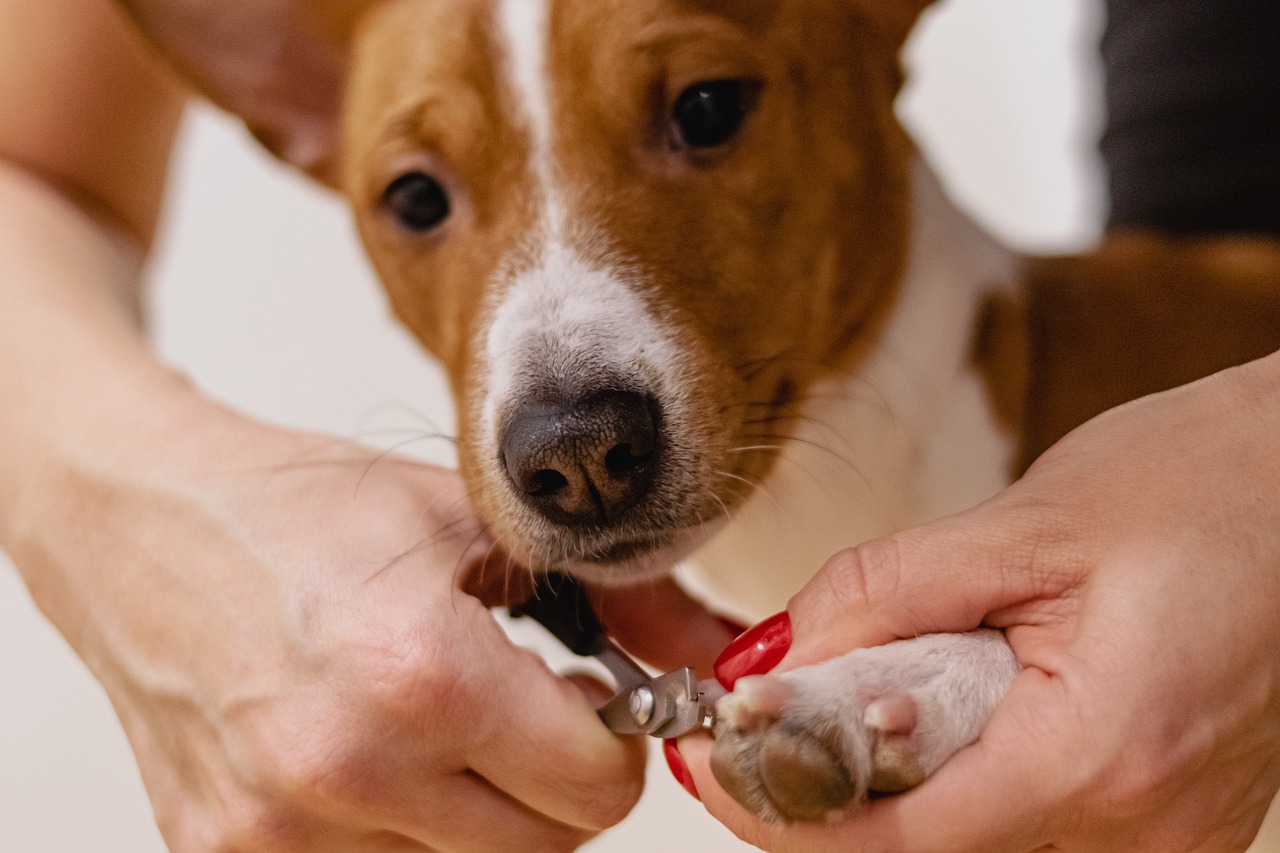
Hold your dog’s paw gently but firmly. If your dog is small, you might place them on your lap. For larger dogs, it might be easier to have them lie down or sit. If your dog has light-colored nails, locate the quick and avoid cutting too close to it. For dark nails, trim small amounts at a time to minimize the risk of cutting into the quick. Look for a chalky white ring that indicates you are approaching the quick.
Hold the clippers at a slight angle, similar to the natural shape of the nail, and make a quick, decisive cut to avoid crushing the nail. If using a grinder, apply it gently to the nail, smoothing it down gradually. After each trim, check the nail’s length and the proximity to the quick, continuing in small increments until the nail is at a safe length. Don’t forget to trim the dewclaws, located on the inner side of the paw, as they don’t touch the ground and can grow excessively long.
Throughout the process, and especially at the end, give your dog plenty of praise and treats. This positive reinforcement will help them associate nail trimming with positive experiences, making future sessions easier.
Tips for a Smooth Nail Trimming Experience
Regular trimming, about once a month, can make the process easier and more familiar for your dog, preventing the nails from growing too long. Staying calm and confident will help your dog feel more at ease, as dogs can sense your anxiety. If your dog is particularly anxious or restless, don’t hesitate to take breaks, trimming a few nails at a time and finishing the rest later.
If you’re unsure or uncomfortable trimming your dog’s nails, seek help from a professional groomer or veterinarian. They can demonstrate the proper technique and help you gain confidence.
Conclusion
Trimming your dog’s nails is an important aspect of their overall health care. With the right tools, techniques, and a calm approach, you can manage this task effectively, ensuring your dog’s comfort and well-being. Regular nail maintenance will not only keep your dog healthy but also strengthen the bond you share through the care and attention you provide.


